Courses
We offer a broad and balanced curriculum, for:
Click the appropriate button below to find the details for each subject offered in each key stage.
Further details of our curriculum are available on the curriculum page.
Overview
Music
Introduction
In GCSE music you will learn to:
• Compose your own music in a variety of different styles, using your instruments and music technology. You will be able to use recording equipment, microphones, midi keyboards and other equipment to create your own music.
• Perform by playing any instrument, singing or rapping, beatboxing or DJing. Improve your performance skills by playing in groups and learning your own solo pieces.
• Listen to and begin to understand music in different styles, from different countries and cultures including pop, rock, jazz, classical, film and world music.
Qualification
GCSE
Awarding body
Eduqas
Course leader
Mrs H Partridge
Assessment
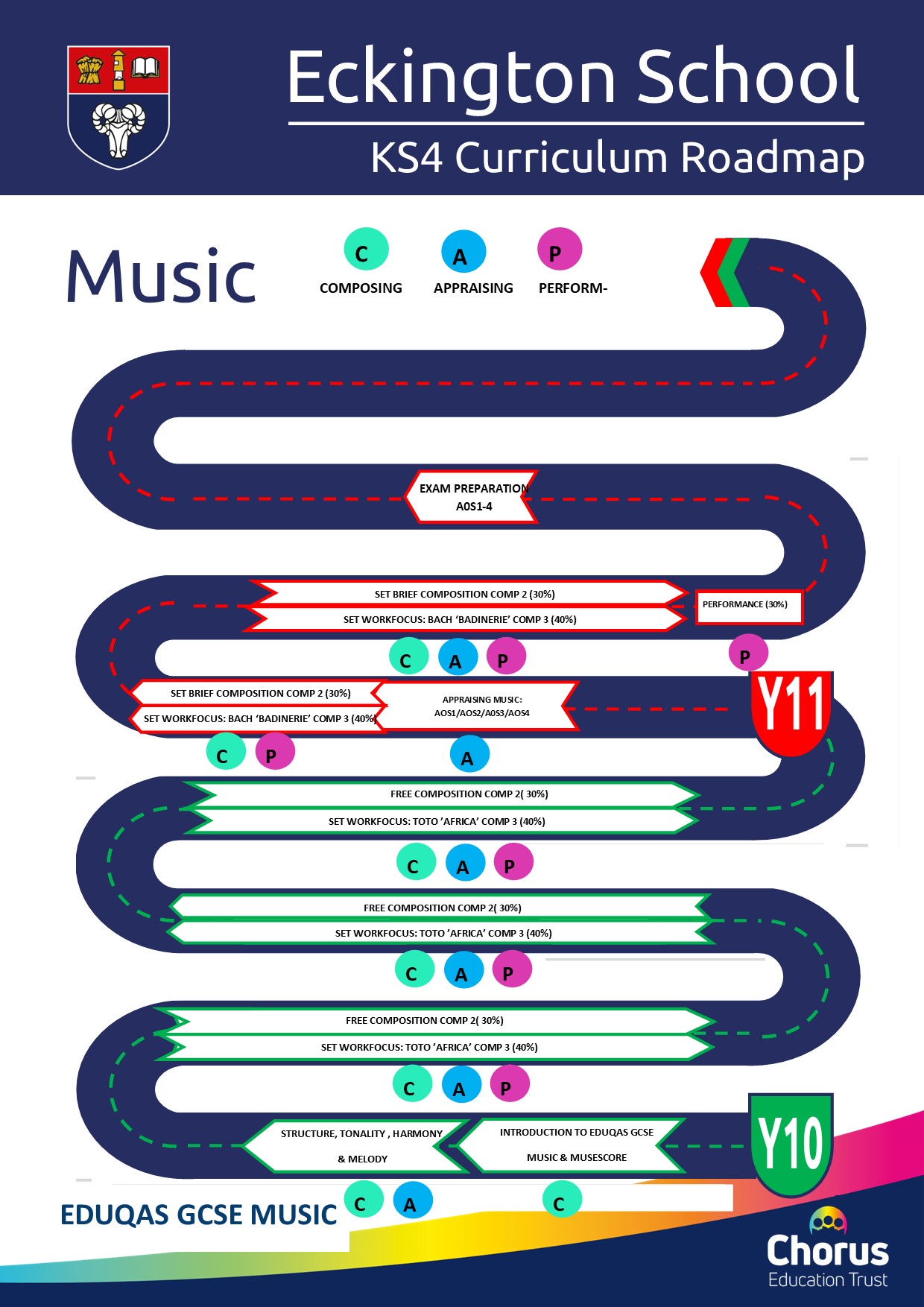
- Component 1: Performing - Performances of 4 - 6 minutes / 30% of
- Component 2: Composing - Two compositions with a total playing time of 3 - 6 minutes long / 30% of qualification
- Component 3: Appraising - Written exam approx 1 hour 15 minutes / 40% of qualification
Curriculum
Curriculum roadmap
Topics
- Ensemble and solo performance skills.
- Composition techniques.
- Music theory, the Western classical tradition, popular music of the 20th and 21st Century and world music.
- A written appraisal based on a set work (Western classical tradition 1650-1910 Mozart Clarinet Concerto in A major, 3rd movement, Rondo, and Little Shop of Horrors, specifically looking at the following tracks: Prologue, Mushnik and Son and Feed Me).
You will record one solo piece and one ensemble piece for assessment, and you must write two pieces of music. This is why students must be up to grade 2 standard and be able to read and write music.
Music development plan
Schools are asked to publish a music development plan that captures their curricular and co-curricular offer and sets out how it will be staffed and funded. Our school music development plan is available below:
Skills and requirements
What skills do I need?
It is important to have:
- An interest in and enthusiasm for music.
- An open mind and creative imagination.
- An ability to enjoy making music by using an instrument, your voice or music technology such as sequencing and recording software.
- An ability to work independently and with others.
- A real interest in listening and appraising different styles of music.
- A committed approach to attending and actively participating in the department’s extended-curricular programme
Skills learned
Music allows you to develop skills such as self-confidence and creativity. You will demonstrate that you can work independently as well as a member of a group.
It is an excellent way to further your instrumental ability and creative skills.
Beyond the classroom
GCSE music is a required preparation for further musical study, such as A-level/BTEC music and music technology. It is also studied at the majority of universities. Music is useful for all vocations and career pathways as it encourages confidence, creative thinking and teamwork. It also allows students to use analytical thinking skills and develops their cultural awareness. Music does not limit you; it allows you to grow creatively
Instrument lessons
Students can sign up for individual instrumental lessons delivered by visiting (peripatetic) music teachers during the school day at Eckington School. Visit our clubs and extracurricular activities page for details.